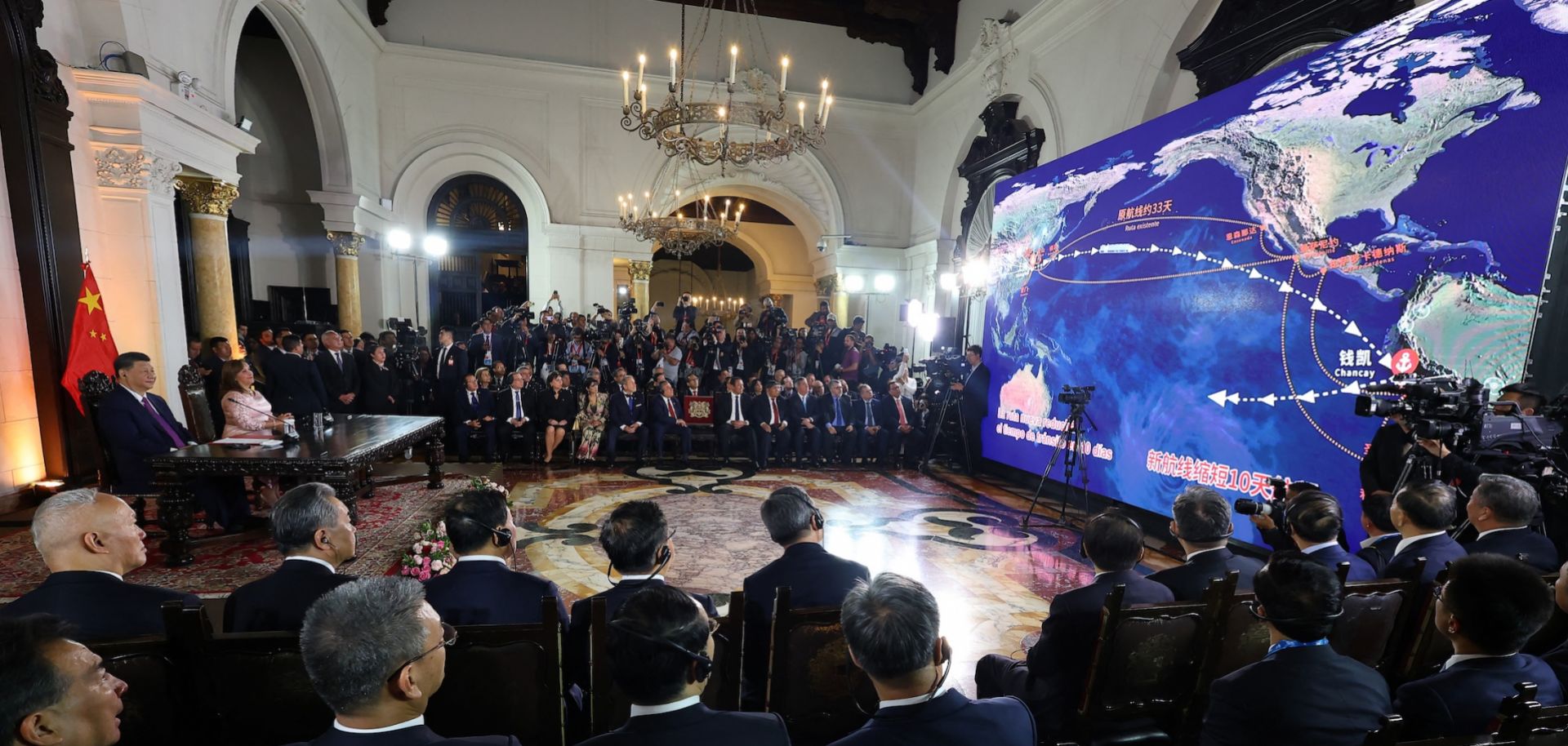
The United States will boost defense and economic cooperation, leverage development finance and make military and economic threats to pressure Latin American governments to favor U.S. interests and counter China, but outcomes will vary depending on their economic reliance and ideological affinity with Washington. On March 7, U.S. President Donald Trump hosted 12 ideologically aligned Latin American leaders at the "Shield of the Americas" summit in Florida. The event created a coalition to fight drug trafficking with military means and counter "hostile foreign influence" in the Western Hemisphere. It marked a new step in Washington's efforts to formally establish U.S. primacy in the region by limiting rivals' influence (especially from China, Russia and Iran), rewarding aligned governments, expanding security partnerships and securing U.S. firms' access to critical material supply chains. The summit was the latest example of the White House's enforcement of a "Trump Corollary" to the Monroe Doctrine (dubbed...